
 Message us

Side Effects of BP Tablets: What to Watch For and What to Do
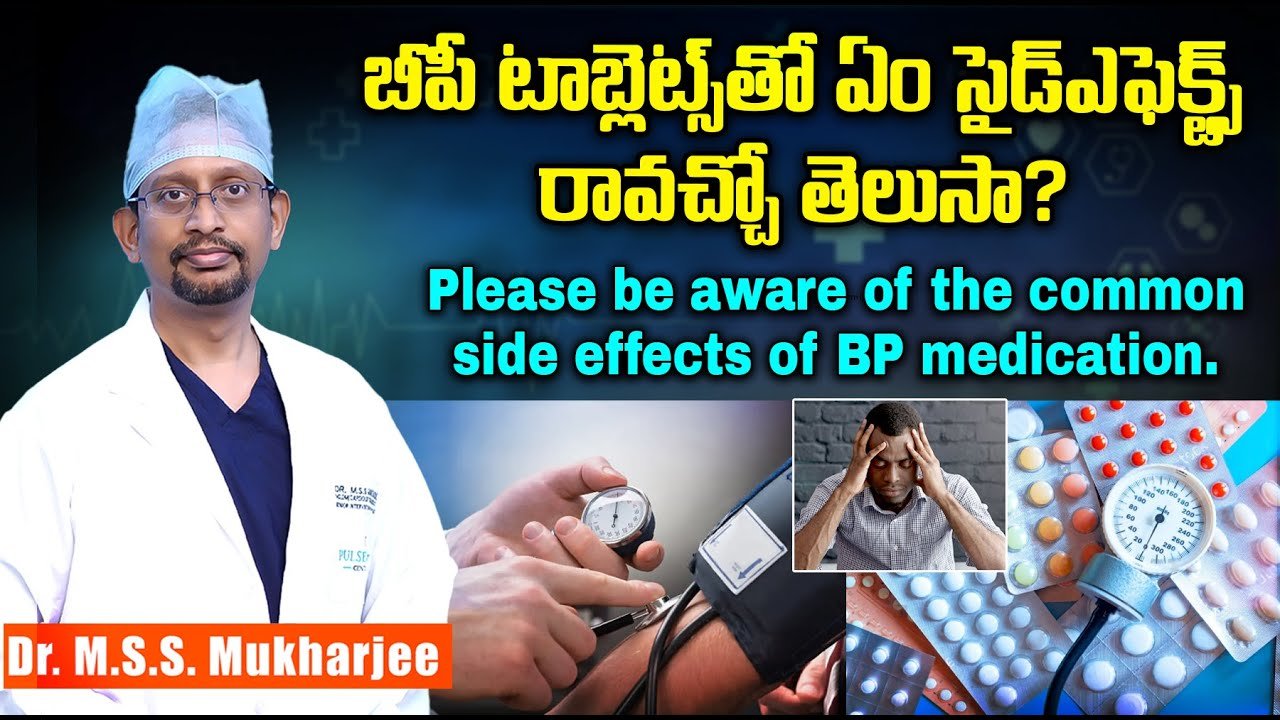
When many people are told to take BP tablets, they think that once they start a BP tablet they have to take it for life. It is not that once you start you must take it for life. Among those who need it, the majority do need it lifelong, and the reason is that they are not able to change their lifestyle much.
If you change your lifestyle, lose weight, take food carefully, exercise well, reduce salt a little, sleep properly, reduce mental stress, reduce your weight if it is high, and give up smoking and alcohol if you have those habits, BP gets controlled in many people, even without tablets.
But that is not what we are looking at today. Today's topic is how many side effects BP medicines can have. If you are using a BP medicine, do watch this, because I have tried to explain clearly what side effects can come. Many people are afraid that BP medicines may have side effects. Truly, there are some. What they are, how to recognise them, and how to take treatment for them is what we will see today.
1. Cough
Firstly, some people get a cough with BP tablets. If you get a cough, it comes from medicines called ACE inhibitors, such as enalapril and ramipril. Commonly used trade names include Envas, Cardace and similar medicines. Because of these, an enzyme called bradykinin accumulates in the lungs and you get a cough. It is a dry cough.
So if you are taking BP tablets and your cough is increasing, check whether you are using an ACE inhibitor. If the ACE inhibitor is changed, within a week the cough goes away completely.
The problem is that the cough need not start when you begin the tablet. It can come even after using it for some years. That is why you may not be able to recognise it. You may think, “I have been using this tablet for so long, why would it cause a cough now?” It can happen like that. So if you are taking a BP tablet and are troubled by a dry cough, go to your doctor, see whether there is an ACE inhibitor, and get it changed.
2. Swelling of the legs
The second very common side effect of BP tablets is swelling of the legs. When their legs swell, many people get frightened that their kidneys have failed or their heart has failed.
If you have leg swelling while using a BP tablet, there are some medicines called calcium channel blockers, such as amlodipine, nifedipine and benidipine. With these medicines that end in “-dipine”, we can get swelling of the legs. Amlodipine is a very commonly used tablet, sold as Stamlo or Amlong, and very commonly used tablets such as Stamlo Beta or Amlong-AT can also cause swelling.
If you are getting swelling and you take one of these, it goes down when the tablet is changed. There is no need to be afraid. Among people using medicines like amlodipine, 5% to 30% can get leg swelling like this. So when swelling comes, do not fear that something has failed. If you are using that tablet, changing it is enough.
3. Weakness, a low pulse or worsening asthma
Third: feeling very weak and drained, the pulse coming down, or asthma getting worse if you have it. If you have symptoms like these, they could be due to tablets called beta blockers. Commonly used ones are atenolol and metoprolol, with brands such as Aten and others. If you are using beta blockers, it is necessary to change them. When they are changed, a low heart rate becomes normal and the weakness and tiredness can reduce.
Especially, people who already have a thyroid problem and feel drained while taking beta blockers need to check whether the two together are affecting them.
4. Passing more urine, muscle cramps and muscle weakness
With some kinds of BP tablets you may pass more urine, get muscle cramps or feel muscle weakness. These BP tablets are called thiazide diuretics. There are two kinds: chlorthalidone and hydrochlorothiazide.
How to know? Usually, if the medicine name ends with H, CH or D, it contains this diuretic. You may have seen Telma H, Telsartan H, Telvas CT and so on. If any of these has a CT, H or D portion at the end, that thiazide diuretic can reduce sodium and potassium, or make you pass more urine.
That is why, when you feel weak, have muscle cramps, or become drowsy and feel you are sleeping more, immediately get your electrolytes checked once. If the electrolytes are abnormal, stopping those tablets and correcting the electrolytes is enough. So if you have BP, are taking BP tablets, and have been feeling very weak and drained for four or five days, you need to get an electrolyte test immediately.
5. Gout
The fifth side effect to describe today is gout. Gout comes when uric acid levels rise a lot, and it comes when thiazide diuretics are used, the medicines with H, CH or D at the end, as we said earlier. If you already have high uric acid or gout and you use these tablets, uric acid rises further and you can get joint pains. If that suddenly comes, changing the tablet immediately is enough.
6. Reduced sexual function
If sexual function reduces or erections are not as good while using a BP tablet, we should think about this sixth side effect. With beta blockers, diuretics, centrally acting tablets like clonidine, and many kinds of BP tablets, sexual function can reduce somewhat in men.
If this happens, the beta blockers or diuretics can be changed and other tablets used. Among beta blockers, nebivolol does not cause this sexual dysfunction. Similarly, ARBs such as losartan or telmisartan do not cause it, and with amlodipine-type medicines it is not much either. Mainly it is beta blockers, diuretics and centrally acting medicines that cause this sexual discomfort.
7. Dizziness when starting a BP tablet
When you newly start a BP tablet, if BP drops and you feel dizzy, this can happen with any BP tablet. But mainly it comes with tablets called alpha blockers. This is called first-dose hypotension. Later they work normally, but at the start they work excessively. Tablets that show off their strength at the beginning are the alpha blockers, such as Minipress XL and Prazopress XL. With these tablets you can suddenly get first-dose hypotension.
8. Angioedema: sudden swelling of the lips, tongue and throat
Eighth is angioedema: the lips suddenly swell, the tongue swells, the throat is troubled and it becomes difficult to breathe. This can come with the same ACE inhibitors we spoke about with the dry cough, such as ramipril and enalapril. It is more likely in smokers. So if anything like this happens, those tablets need to be stopped.
9. More hair growth
If there is more hair growth on the body and face: a tablet called minoxidil is rarely used for BP now. If you are on something like that, hair growth can increase because of minoxidil.
10. Swollen gums
Very, very important, and even doctors do not know it well: gum hypertrophy. When you brush, if your gums are swelling a lot, we must look at that very carefully. The calcium channel blockers I told you about, the “-dipines” such as nifedipine or amlodipine, can make the gums hypertrophy. If that happens, the tablet needs to be changed.
11. Mental fog, depression and nightmares
One more important thing: if mental fog or depression comes, or more dreams come after starting the tablet, these come in two ways: either with beta blockers or with centrally acting tablets such as clonidine (Arkamin) or methyldopa. With these, depression, more dreams or more nightmares can happen. We need to watch for them carefully.
Rare side effects, quickly
- Rashes: some people may get rashes. Diuretics (tablets with CT, H or D, as we said) and ACE inhibitors can cause photosensitivity: going into the sun brings up rashes.
- Taste disturbance: a metallic taste can come in some people, rarely.
- Liver enzymes can rise slightly, rarely.
- Nasal congestion (blocked nose) with Prazopress XL or Minipress XL.
- Nightmares with beta blockers, as mentioned.
- Gynaecomastia (breast enlargement in men): spironolactone (Aldactone) is rarely prescribed when BP is not well controlled; with it, men can get breast pain or breast swelling.
- Pancreas problems can rarely come with diuretics or ACE inhibitors.
- Breakdown of blood can rarely come with methyldopa.
A little more common: constipation. If you get constipation after taking a BP tablet, it comes from a different type of calcium channel blocker, the non-dihydropyridine ones such as Calaptin or Dilzem.
Never stop BP tablets suddenly
I hope I have covered everything quickly. If it went a bit fast, watch the video slowly two or three times. If you use a BP tablet and you see any side effect from this list, ask your doctor and get it changed, and you can avoid troublesome situations.
Whatever you do, do it under your doctor's supervision. Do not suddenly stop BP tablets, even if you see these side effects, because if you stop and BP suddenly shoots up, it can sometimes cause paralysis, affect your eyesight or cause kidney problems. So under your doctor's supervision, if your BP tablets are causing side effects, get them changed, get medicines written that have no side effects, and keep your BP under control too.
In his words: the key point
If you notice any of these side effects, ask your doctor and get the tablet changed. Do everything under your doctor's supervision, and never stop BP tablets suddenly.
Frequently asked questions
Do I have to take BP tablets for life once I start?
Not necessarily. Dr. Mukharjee explains that many people can control BP without tablets by losing weight, eating carefully, exercising, reducing salt, sleeping properly, reducing stress and giving up smoking and alcohol. Most who need tablets do take them long term because lifestyle is hard to change.
Which BP tablet causes a dry cough?
ACE inhibitors such as enalapril and ramipril. The cough can start even after years of use. Changing the ACE inhibitor usually stops the cough within a week.
Why do my legs swell on BP tablets?
Calcium channel blockers ending in “-dipine”, such as amlodipine, cause leg swelling in 5% to 30% of users. It is not a sign of kidney or heart failure; changing the tablet is enough.
Can I stop my BP tablet if I get a side effect?
No. Stopping suddenly can make BP shoot up and cause paralysis, eyesight problems or kidney problems. Change the tablet under your doctor's supervision.
— Dr. M. S. S. Mukharjee
Senior Interventional Cardiologist
Pulse Heart Super Speciality Hospital, Miyapur, Hyderabad
This article is for educational purposes only and isn't a substitute for individualised medical advice. Talk to your own doctor before starting, stopping or changing any medicine.