
 Message us

Symptoms Before a Heart Attack: When Should You Worry?
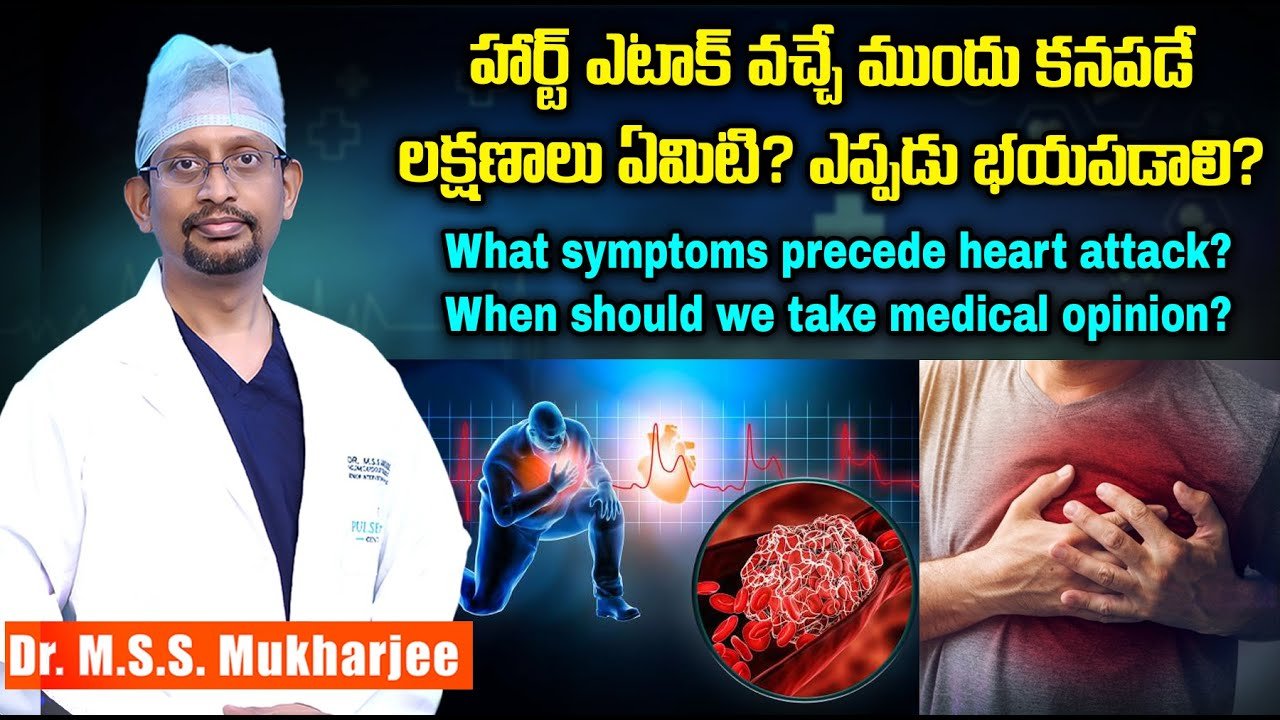
Patients often ask what symptoms appear before a heart attack and how to recognise them: what symptoms appear a week to 10 days before a heart attack, and how they are explained scientifically. Many videos have already come on this, but there is a reason I have not made one until now.
The symptoms seen before a heart attack are like symptoms seen normally; there is not much difference. What is important is to say clearly when we should go to a doctor and when to get checked. So first let us see what the symptoms are, and then I will tell you the difference: when to go to a doctor and how to get checked.
1. Unusual fatigue
The first thing to understand is unusual fatigue: feeling very weak and tired without knowing why, not because you worked harder, not because of lack of sleep, not because of low or high blood, with no reason. Especially if this is seen in ladies, it should not be ignored; it can lead to danger.
McSweeney and colleagues published a study in Circulation: in 515 ladies, almost 70% had unexplained fatigue as a common prodromal symptom. So whenever you have unexplained weakness with no other known cause, it can lead to a heart attack next. That is important.
2. Sleep disturbance and anxiety
Not getting sleep, waking up again and again, a kind of fear that some problem is coming: these can happen before a heart attack. If you have some problem and are a bit tense because of it and cannot sleep, okay. But if for no reason you are not sleeping properly, waking in between, and feel a sense of doom that something may happen, this anxiety or sleep disturbance can come days to weeks before a heart attack.
3. Mild, brief chest discomfort
Important: mild transient chest discomfort, meaning short episodes, many times, of chest pain or heaviness, especially when walking or when stressed. You got very angry with someone and in between felt a gripping; when the anger subsided, it stopped. You walked, and while walking felt a little gripping.
This is the most important of all. If you feel this, however short, even if it feels like burning, if it comes when walking or when angry, take it very significantly. It is even included in the guidelines: the ESC 2020 guidelines say that if exertional symptoms come, we should know we may be in the stage before a heart attack.
4. Breathlessness on exertion
Some people get breathless on exertion. Earlier you climbed five floors without breathlessness, but recently even one floor makes you breathless; walking a short distance makes you breathless; not only stairs, but climbing a slope makes you breathless, and you have to stop for a while and walk again. Even then we need to notice that there is a heart problem. That is very important, and it has been in published reports many times.
5. New or worsening digestive symptoms
As I said in another video: a new gas-like feeling, or something that earlier went away with a simple Gelusil but now does not go and lasts longer, or comes on walking, or is different from before. In these four conditions, gas-like symptoms can be heart-related, especially related to the right-side blood vessel of the heart. This has been stated in the American Journal of Cardiology: digestive symptoms can come before a heart attack, and how to recognise them.
6. Skipped beats and palpitations
If palpitations or missed beats are coming that were not there before. Many people feel palpitations for a long time; that is not this. If it is newly felt right now, palpitations are felt more, and you are troubled when they come, it is better to get a check-up.
7. Jaw, throat, shoulder or arm discomfort
If there is pain in the jaw, or pain in the throat, especially on walking, or the shoulders or both arms are pulling, this is very important and you need to go to a doctor immediately. It need not be only the left arm. If it comes like this, we must think it is heart-related. Especially in people with sugar or in older women, instead of classical chest pain it can come this way. Remember that.
8. Sudden dizziness
Some people suddenly get dizzy, which was not there before. A common cause of dizziness is cervical spondylitis. Not like that: you are getting dizzy especially when walking, and it reduces when you sit. If this symptom comes, we must check it importantly.
If we carefully watch these eight, whether you fall down dizzy or just feel dizzy, we can notice a heart problem coming.
Why these symptoms can mislead
Some of these eight, like a lot of weakness, sleep reducing or palpitations, can come to anyone, not only before a heart attack. We must look in two ways. One kind of research takes 100 heart attacks and looks at what symptoms came before them. Another kind looks at 100 people with these symptoms and sees how many get heart attacks.
Among 100 people who had heart attacks, if 80 just felt a little gas, that is not very significant. What is important are the symptoms that, when felt, mean more of those people are likely to get a heart attack. Everyone says weakness, poor sleep, gas-like feelings and heart irregularities come before a heart attack. But in the majority of people, almost 80 to 90%, these symptoms keep coming. We cannot run to the doctor every time. So what to do?
What to do
1. A yearly heart check-up
First, whether you have symptoms or not, get a heart health check-up once every year. That is very important. People past 40, people with symptoms, and people with family history must compulsorily get tested once every year. In it they check BP, sugar and cholesterol, and do an ECG, echo and TMT. Get checked even if you have no symptoms.
2. These three symptoms on walking
Second, of all the symptoms I mentioned, the important ones are:
- When walking, pain, heaviness or burning in the chest, even if it feels like gas.
- Discomfort in the throat, jaws or both shoulders when walking.
- Feeling dizzy when walking.
What is common to all three? They come when walking. If you have any of these, even if you got checked within the year, go to the doctor immediately. So it is not just knowing what symptoms come before a heart attack; what matters is knowing which symptoms should take us to a cardiologist.
3. If you have risk factors
When risk factors are high, we must be very careful. Risk factors are BP, sugar, high cholesterol, high weight, high stress, obesity, smoking and taking a lot of alcohol. People with these risk factors should go to the doctor and get tested even if the symptoms are mild or not typical.
In his words: the key point
Get a heart check-up every year. If chest, throat, jaw or shoulder discomfort or dizziness comes on walking, go to the doctor immediately, and if you have risk factors, get tested even for mild symptoms.
Frequently asked questions
What symptoms can come before a heart attack?
Dr. Mukharjee lists unusual fatigue, sleep disturbance and anxiety, brief chest discomfort on walking or anger, breathlessness on exertion, new or changed gas-like symptoms, new palpitations, jaw, throat, shoulder or arm discomfort, and dizziness on walking.
Which symptoms need a doctor immediately?
Chest pain, heaviness or burning, throat, jaw or shoulder discomfort, or dizziness that comes on walking, even if you had a check-up within the year.
Who should get a yearly heart check-up?
People past 40, people with symptoms and people with a family history: BP, sugar and cholesterol with ECG, echo and TMT every year.
Are symptoms different in women?
In women, about 70% had unexplained fatigue before a heart attack in one study. Older women and people with sugar may get jaw, throat or arm discomfort instead of classical chest pain.
— Dr. M. S. S. Mukharjee
Senior Interventional Cardiologist
Pulse Heart Super Speciality Hospital, Miyapur, Hyderabad
This article is for educational purposes only and isn't a substitute for individualised medical advice. Talk to your own doctor before starting, stopping or changing any medicine.