
 Message us

How to Lower Cholesterol Naturally With Diet
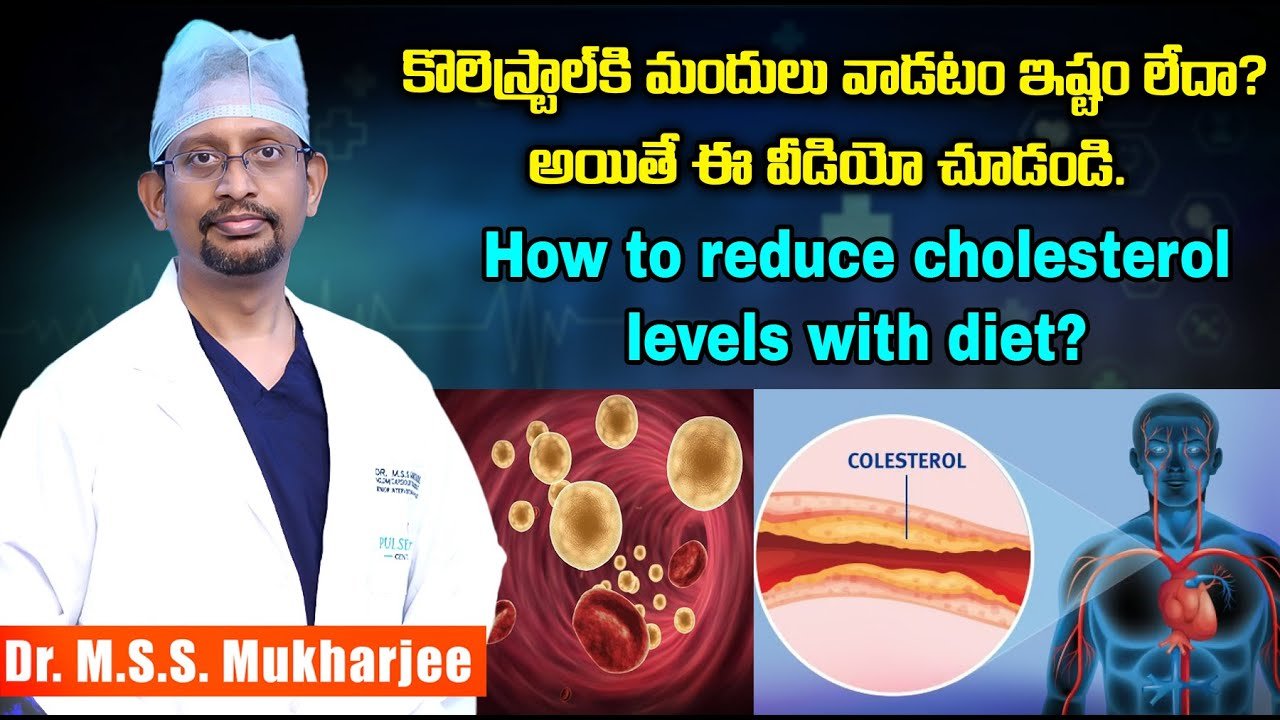
Today let us talk about cholesterol and cholesterol medicines. But today is a little different: instead of medicines, let us see what diet people who want to reduce cholesterol with diet alone should take, and how.
We understand that LDL cholesterol is bad cholesterol and HDL cholesterol is good cholesterol. If LDL is very high, heart problems are more likely. If you have had a heart attack, or you have diabetes, it is good if LDL in the blood is below 70. The good way to keep it below 70 is with medication, with medicines called statins, which reduce it.
Statins are used in two ways: primary prevention and secondary prevention. Secondary prevention means after a heart attack has come, or after sugar has already started. Primary prevention means trying to reduce risk before any of these, when there are just risk factors. In primary prevention, tablets should be taken when LDL crosses 190. In secondary prevention, we need to take them even when LDL is above 70.
Why this video
Recently many problems have come up: misleading videos and misleading content saying cholesterol has nothing to do with heart disease, and a lot of negativity about cholesterol medicines, that statins should not be used and cause many problems. Even in America, RFK Junior, now serving as Health Secretary under President Trump, speaks negatively about statins. So overall, negative information about statins is reaching people, and this can cause harm.
People with heart disease definitely need to use statins. But some people say, “We will definitely not use them; tell us what else to do.” If such people watch this, they will completely understand how we can reduce cholesterol with diet.
How diet reduces cholesterol
Cholesterol is absorbed in the intestine; diet can reduce that. The liver makes cholesterol; some foods stop that synthesis. Some substances modify bile acid metabolism. Not only that, they change the size and concentration of lipoprotein particles. For example, if there is large LDL instead of small dense LDL, the danger is lower; some foods change lipoprotein particle size. Let us quickly go through these foods one by one and how much they can reduce cholesterol.
Soluble fibre
If we take more fibre, cholesterol is likely to be lower. Oats, barley, legumes, apples, citrus fruits and flaxseeds reduce bile acid reabsorption. Because of this, hepatic LDL receptors increase. LDL receptors are on the liver; when they increase, they take more LDL out of the blood into the liver, so the danger is lower.
How much does LDL fall? If we take 5 to 10 grams of fibre a day, LDL cholesterol can fall by almost 5 to 10%. That means 100 can come to 90. I am saying this based on an article published in the Journal of Nutrition in 2000. So if we take soluble fibre, cholesterol definitely is likely to be a little lower.
Plant sterols and stanols
Plant sterols and plant stanols have a structure like cholesterol, so they bind to cholesterol receptors and reduce cholesterol absorption. In America fortified spreads, juices and seeds are available, but such fortified spreads are not easily available here. Supplements of plant sterols and plant stanols are available on Amazon. If 2 grams are taken, LDL cholesterol can fall by almost 10%.
Isabgol
Another important one, available in India, is isabgol. Many people take it for free motions. It is a natural source of fibre. If we use that fibre, LDL can fall by up to 7%. How much to take: 5 grams twice daily. So for people whose motions are not proper and who want to reduce cholesterol, take it as a wonderful opportunity. Isabgol makes motions free, and at the same time its fibre content reduces cholesterol reabsorption and reduces apolipoprotein B, so isabgol works to some extent.
Legumes and whole grains
These are very important. If you take them, cholesterol can fall to some extent. Oats, barley, quinoa, the red rice now available, which they call matta rice; or legumes such as rajma, chikkudu (broad beans) and beans. Whole grains and legumes have a lot of soluble fibre. They also modulate insulin and improve the gut microbiota to some extent. If we use whole grains, LDL falls by almost 5 to 8%, as stated in the American Journal of Clinical Nutrition in 2007. So people who want to reduce LDL will benefit from taking more of these.
Red rice and red yeast rice are different. Red rice is our Kerala matta rice, available separately. It is red because of molecules called anthocyanins, which have strong antioxidant properties, so it definitely works to reduce LDL to some extent.
Diets that reduce LDL
Portfolio diet
Proposed by Dr. David Jenkins. In it: 10 to 25 grams of fibre, about 25 grams of soy protein, about 2 grams of plant sterols per day, and about 30 grams of nuts per day. If we can put foods into these different portfolios, soluble fibre, soy protein, plant sterols and nuts, he showed almost 30% LDL reduction in JAMA in 2003. Remember these: soluble fibre, soy protein, plant sterols and nuts, all taken together.
Mediterranean diet
In the Mediterranean diet too, LDL can fall; not only that, HDL can rise and cardiovascular disease can fall, as Estruch and colleagues published in NEJM in 2013. It has more olive oil, nuts, fruits, vegetables and fish, and whole grains. Through these too, LDL can improve.
DASH diet
The DASH diet was started to reduce BP, but it also reduces cholesterol. It runs on these principles: reduce sodium, take more fruits and vegetables, take low-fat dairy and more lean proteins.
So in all three, the Portfolio diet, the Mediterranean diet and the DASH diet, LDL cholesterol can fall.
Foods with some evidence
Some separate foods do not have such strong evidence but have some: garlic can reduce it to some extent, about 3 to 4%; turmeric can reduce it somewhat; cinnamon can reduce it somewhat. Not dramatically, but they show some benefit.
Evidence-based supplements
An important warning for everyone watching: I am not promoting these supplements. I am telling you to take tablets properly. But for those who do not like taking tablets and want natural, I am telling you about molecules that can be taken somewhat safely. Do not think I am promoting them. I do not sell any of them; I have no connection with them.
- Red yeast rice capsules: can reduce LDL cholesterol by 15 to 25%. They are available on Amazon. They contain monacolin K, which is chemically related to lovastatin, like its cousin. The problem is that you get all the side effects of a statin, and it is somewhat unregulated, so you need to check what dose you are using.
- Berberine capsules: berberine is an alkaloid extracted from a tree turmeric, Berberis aristata. Information about berberine has increased recently. It reduces PCSK9 expression; PCSK9 inhibitor injections are now coming to reduce cholesterol, and berberine works by the same mechanism. Clinical studies suggest LDL can fall by up to 20%. In India it is available as a herbal supplement in many forms. I do not have complete information on it yet; if it becomes more popular, we will do a video on it. For now, cholesterol can fall to some extent with berberine.
- Taurine: available in seafood and meat, and taurine supplements are available. With it, triglycerides may improve, total cholesterol may fall somewhat, and there is a minimal effect on LDL cholesterol.
These three supplements, red yeast rice, berberine and taurine, reduce cholesterol.
Weight loss, exercise and other approaches
If body weight falls by 5 to 10%, LDL cholesterol and triglycerides can fall significantly, by up to about 10%. With exercise, LDL may change somewhat, but exercise is very good for raising HDL. Apart from this, carbohydrate-restricted diets and intermittent fasting also raise HDL, and LDL may get somewhat better; more complete information on that is still needed.
Foods to avoid
- Avoid trans fatty acids, such as vanaspati and baked goods; they keep raising LDL.
- Refined carbohydrates and sugars raise triglycerides a lot and can change LDL somewhat, so white rice and white sugar can also raise it.
- If you take a lot of saturated fat, LDL cholesterol rises. People say it is “good LDL”; do not listen to all that. Do not take too much saturated fat.
- If alcohol is avoided, triglycerides can fall.
If we follow all these dietary interventions, LDL cholesterol can fall.
Summary
- LDL cholesterol definitely increases the chance of heart disease.
- If you have no previous heart problem and no sugar, keep LDL below 100; if it crosses 190, take medicine. If you have a previous heart problem or diabetes, take medication if it is above 70 and bring it below 70.
- For those who do not want medication, dietary strategies can reduce it by 5 to 30%: soluble fibre, isabgol, plant sterols, whole grains and legumes.
- Supplements such as berberine, red yeast rice and taurine can be taken a little responsibly; remember they can also have side effects.
No single food is magic. Overall, if we carefully follow everything we know, we can reduce cholesterol to some extent with diet too.
In his words: the key point
Diet can lower LDL by about 5 to 30%. People with a previous heart problem or diabetes should take medication if LDL is above 70. No single food is magic.
Frequently asked questions
When do I need a cholesterol tablet?
Dr. Mukharjee explains: without previous heart problems or diabetes, keep LDL below 100 and take medicine if it crosses 190. With a previous heart problem or diabetes, take medication if LDL is above 70 and bring it below 70.
How much can diet lower LDL?
About 5 to 30%. Soluble fibre (5–10 g/day) lowers LDL by about 5–10%, plant sterols (2 g) about 10%, isabgol up to 7%, whole grains 5–8%, and the Portfolio diet almost 30%.
How much isabgol should I take for cholesterol?
5 grams twice daily. It can lower LDL by up to 7% and also helps free motions.
Is red yeast rice a safe alternative?
It contains monacolin K, related to lovastatin, so it has statin side effects and is unregulated. Dr. Mukharjee does not promote supplements and advises taking prescribed tablets properly.
— Dr. M. S. S. Mukharjee
Senior Interventional Cardiologist
Pulse Heart Super Speciality Hospital, Miyapur, Hyderabad
This article is for educational purposes only and isn't a substitute for individualised medical advice. Talk to your own doctor before starting, stopping or changing any medicine.