
 Message us

Heart Working Only 30%: Can It Become Strong Again?
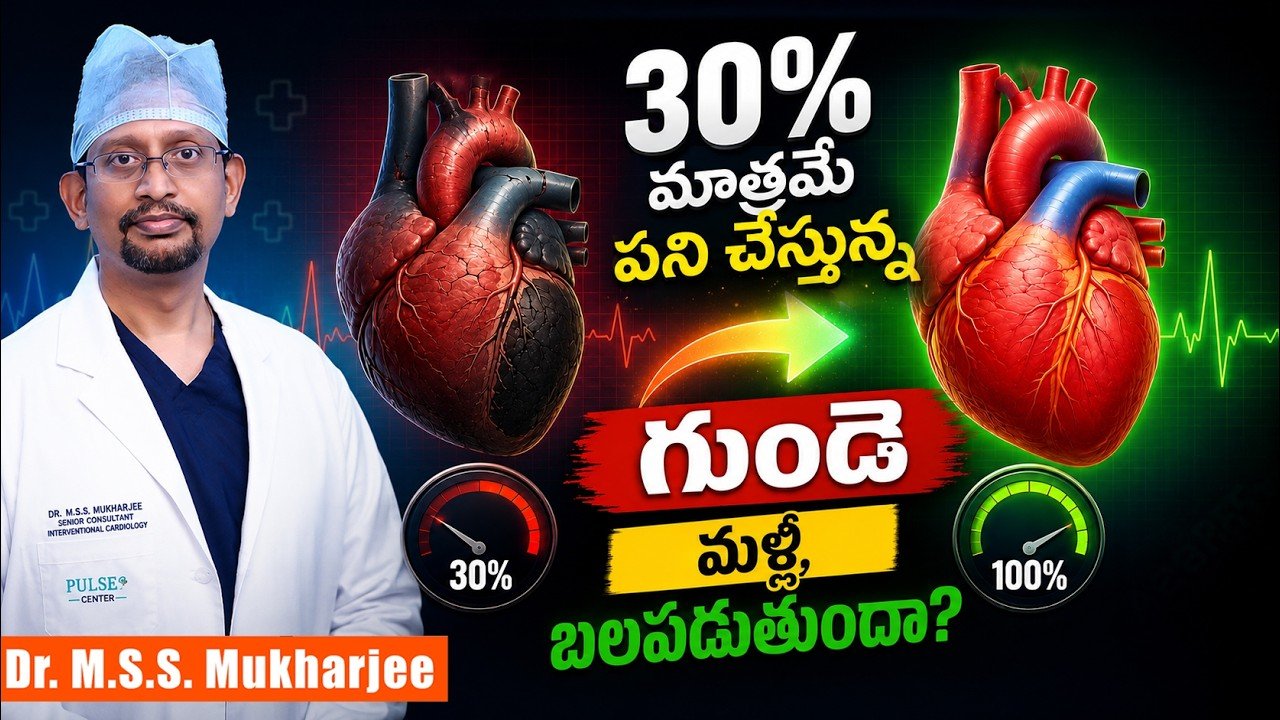
“Doctor, I had a heart attack and now they say my heart works only 30 percent. Should I stay like this for the rest of my life?” This is a question I hear often. But here there is a hopeful thing many people do not know.
Not in every case where the heart is said to be weak is the heart muscle permanently damaged. Sometimes it is just as if it is sleeping: it is alive, but not working with full strength. If the right treatment is given, it can wake up and work again. This wonderful concept is called myocardial viability in medical science.
Today let us learn about myocardial viability, one of the most interesting and most hopeful subjects in heart medicine.
Why heart muscle becomes weak
First, one thing to understand: our heart also needs food and oxygen. If blocks form in the blood vessels that supply them, enough blood does not reach the heart muscles. If that continues for months or years, some heart muscles become weak. If it goes on, they may not pump properly, and because of that the heart's pumping reduces.
But here the real story begins. Not every weakened heart muscle dies. Some muscles reduce their work to protect themselves. In medical terms this is called hibernating myocardium. Just as a bear sleeps through winter, this heart muscle also lives on less energy.
An example: the slow fan
Suppose the voltage in your house is very low. The fan turns very slowly. That does not mean the fan is broken; if the voltage comes properly, it turns fast again. In the same way, if the heart muscle does not have enough blood supply, it looks weak. But it may still be alive.
Is the muscle alive or permanently damaged?
Now the question is: how do we know whether this heart muscle is really alive or permanently damaged? There are special tests for that:
- Cardiac MRI
- PET scan
- Dobutamine stress echocardiography
- Nuclear viability scan
These tests can tell whether there is still life in the heart muscle.
Another example: suppose there is an acre of field with plenty of water, and suddenly the water stops. After some time, even if we give water again, the field does not completely recover; some of it may be completely damaged. These four tests tell which muscle is damaged like that, and which muscle is alive but still looks weak. This is called myocardial viability.
How this changes treatment
This information can completely change treatment. For example, suppose a patient's heart pumping strength is only 25 percent. If his viability test shows the heart muscle is still alive, after these blocks are corrected by angioplasty or bypass, heart function can increase significantly. Breathlessness can reduce, tiredness can reduce, and a person who could not walk can come back to normal life.
That is why, as soon as you hear the ejection fraction is low, do not lose hope. Sometimes the heart muscle is not completely damaged; it may just be waiting for the right opportunity.
Important to know
One important thing must also be said here. Not every patient needs a viability test, and not every weak heart recovers completely. That is why the decision of which test to do and which treatment to give should be taken by your cardiologist. But knowing that the possibility of myocardial viability exists is very important.
Ask your cardiologist
If you or anyone in your family has a history of an old heart attack, the heart's pumping strength has reduced, and there is frequent breathlessness, tiredness or heart weakness, ask your cardiologist: “Do I need a myocardial viability test?”
Because sometimes the heart muscle we think is completely weakened still has life in it. All it needs is the right blood supply, the right treatment and the right opportunity. If this information is useful to you, share it, because it can give someone new hope.
In his words: the key point
Not every weak heart is permanently damaged. If you have an old heart attack and reduced pumping, ask your cardiologist whether you need a myocardial viability test.
Frequently asked questions
Can a weak heart recover after a heart attack?
Sometimes. Dr. Mukharjee explains that some weak muscle is hibernating, alive but working less. If blocks are corrected by angioplasty or bypass, heart function can increase significantly.
What is a myocardial viability test?
A test that shows whether weak heart muscle is still alive: cardiac MRI, PET scan, dobutamine stress echocardiography or a nuclear viability scan.
Does everyone with low ejection fraction need this test?
No. Not every patient needs it and not every weak heart recovers completely; your cardiologist decides which test and treatment are right.
Who should ask about a viability test?
Anyone with an old heart attack, reduced pumping strength, and frequent breathlessness, tiredness or heart weakness.
— Dr. M. S. S. Mukharjee
Senior Interventional Cardiologist
Pulse Heart Super Speciality Hospital, Miyapur, Hyderabad
This article is for educational purposes only and isn't a substitute for individualised medical advice. Talk to your own doctor before starting, stopping or changing any medicine.